
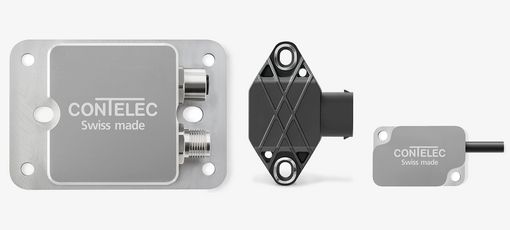
IMU tilt sensors
The IMU innovation: groundbreaking cutting-edge technology that adapts to your needs – not the other way round.
Our new Inertial Measurement Unit (IMU) sets new standards with its combination of technological excellence and maximum flexibility. Thanks to an advanced, unique next-generation algorithm, the solution can be tailored precisely to the specific requirements of your application. The result is uncompromising performance and customized precision at an unbeatable price-performance ratio.
Our selling points
Standard IMUs quickly reach their limits in the event of movement, vibration and shocks. Developed for precisely these conditions, Contelec’s IMU technology delivers stable and precise measurement values even when subjected to dynamic movements. Robust sensors and customizable algorithms allow the solution to be optimized for specific applications without compromise.
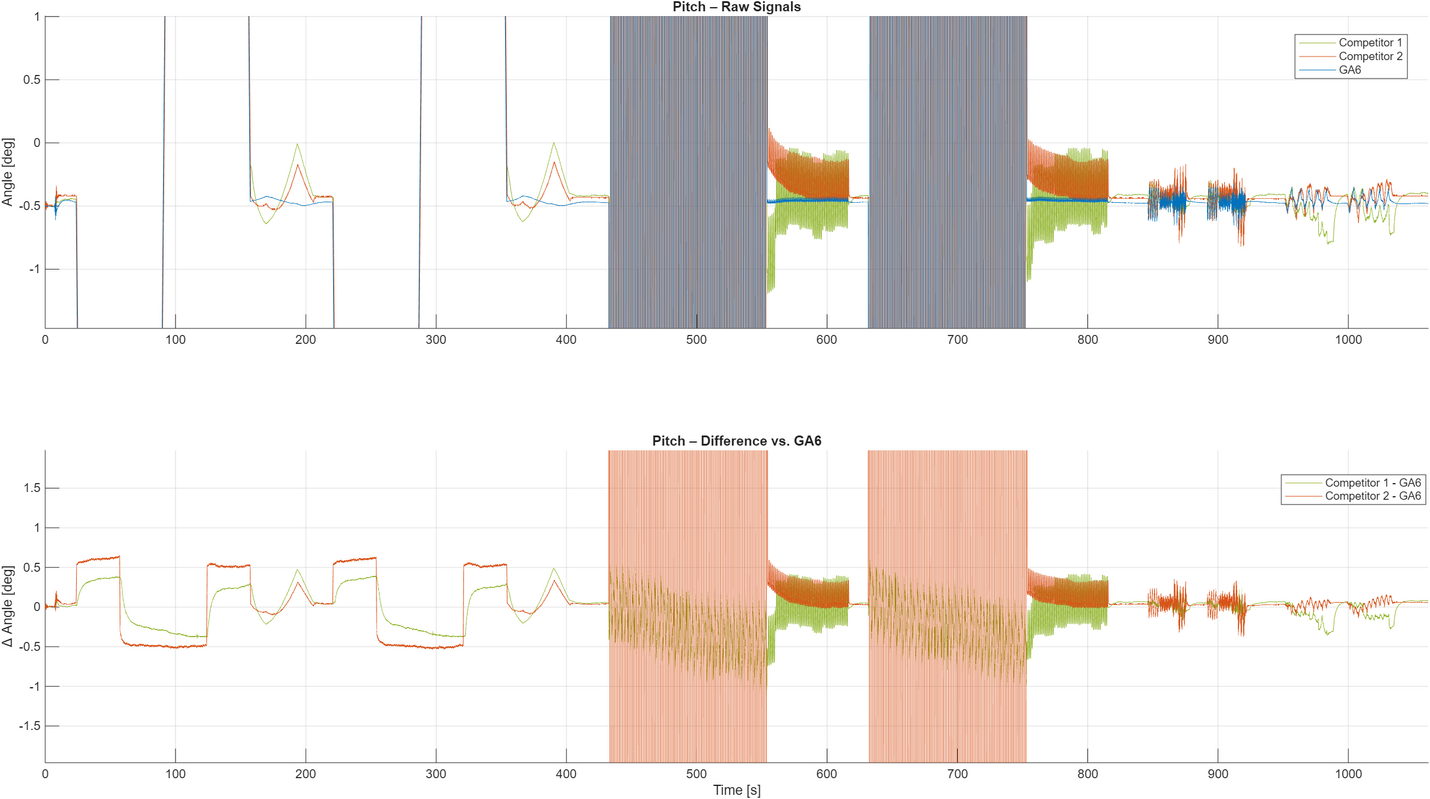
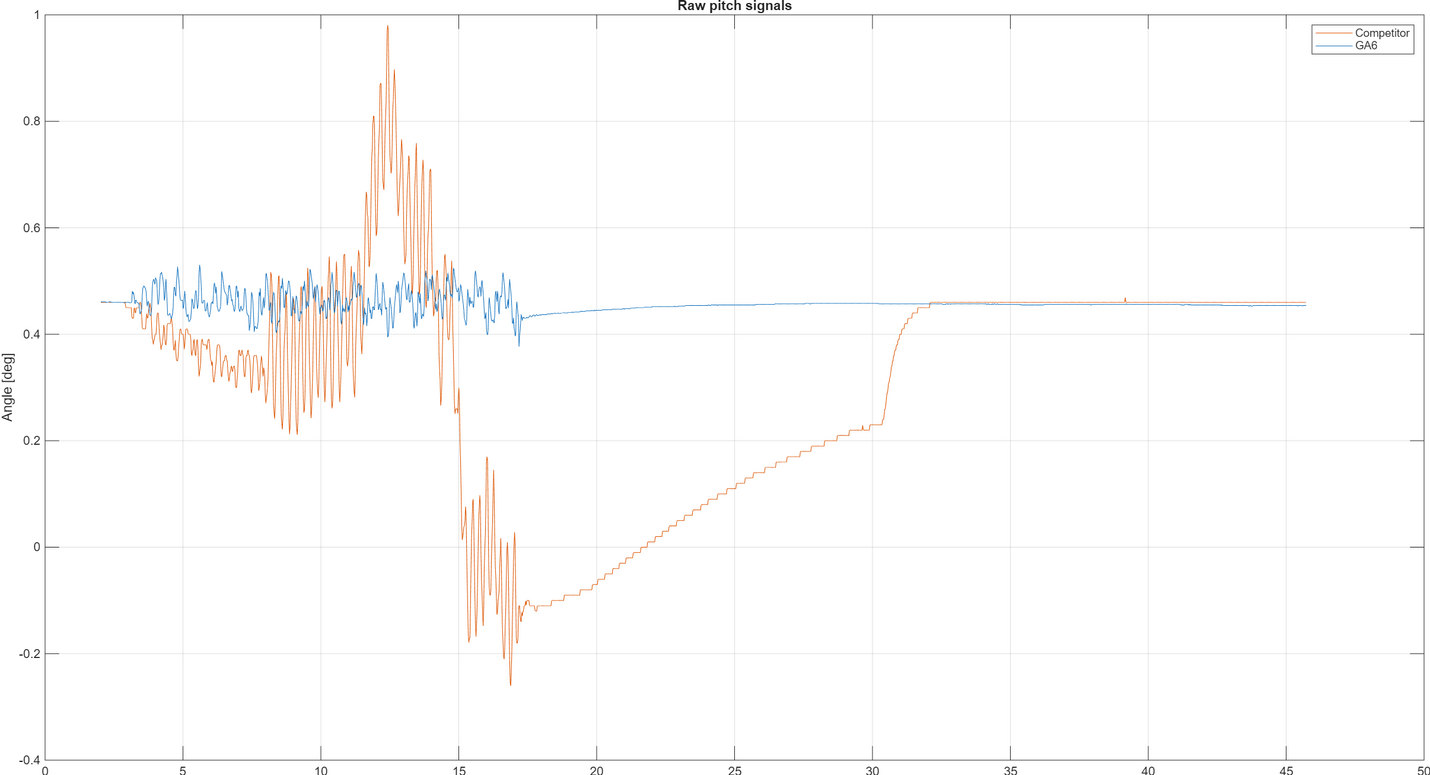
Reliable angle and tilt determination – even under dynamic conditions
For decades Contelec has been known for its precise and robust sensor solutions. With the new IMU technology, the company is expanding its portfolio to include a powerful solution that can reliably record angle and tilt information in dynamic applications. Cutting-edge sensor fusion, robust MEMS technology and optimizable, application-specific algorithms enable stable measurement results even under demanding operating conditions.
Challenges for conventional IMU systems
In many industrial applications, rapid acceleration, vibrations and mechanical shocks can affect sensors. At the same time, machines and systems are often constantly in motion. This presents a significant challenge for conventional IMU systems.
Accelerations are often interpreted as perceived changes in tilt, leading to unstable angle values. In addition, many systems require regular downtimes so that the sensor bias can be determined again. Without this reference, the drift continues to increase. Warm-up times due to integrated heating elements or sensitive MEMS structures can also limit usability in industrial applications.
Dynamically compensated tilt and angle measurement
Contelec’s next-generation IMU technology was developed for precisely these dynamic operating conditions. An advanced algorithm compensates for accelerations and rotational movements in real time. Acceleration and rotation components are evaluated and weighted correctly on the basis of a model, so that stable and precise angle and tilt values are generated even during movement.
Another advantage is the stable sensor fusion even during continuous motion. Bias and system parameters are continuously stabilized without the need for downtimes. This makes the IMU particularly suitable for applications in which machines are in constant operation.
Resistant to environmental influences
Industrial applications place high demands on sensors – in terms of both mechanical loads and temperature stability.
Contelec’s IMU works without active heating and, thanks to integrated temperature compensation, is ready for use as soon as it is switched on. Stable measurement parameters are guaranteed over the entire specified temperature range.
It also reliably withstands mechanical stresses. The signal processing is specially designed to suppress vibration components, ensuring that stable angle and tilt values are obtained even under strong vibration. At the same time, mechanical shock events of up to 15 g can be actively measured and processed.
Optimized performance for every application
Different applications place different demands on dynamics, stability and noise behavior. That means standardized filter settings always entail compromise.
In the next-generation Contelec IMU, filter bandwidths, weightings and dynamic models can be adapted to specific applications. This allows performance to be specifically optimized to match the actual motion profile of the respective application.
Contelec also utilizes robust technologies in its design: the MEMS sensors have hermetic wafer-level encapsulation and an optimized 3D structure geometry. This minimizes adhesive effects and greatly reduces the risk of what are known as stiction effects by design.
For the internal calculation of the angle and tilt values, the algorithm uses robust mathematical representations. This prevents gimbal lock in the internal calculation model and ensures stable calculation across the entire range of motion.
Your benefits with the Contelec IMU at a glance
- Reliable tilt readings while your machine is moving, not just at standstill
- Stable signals even under continuous vibration
- Ready-to-use angle values instead of raw data: sensor fusion runs inside the sensor; integration via CANopen or CAN J1939
- Algorithms that we tune to your machine and its motion profile
- Housing sizes from 40 × 26 × 10 mm